
Oil settles at $85.72 as surplus outlook outweighs Hormuz attacks
U.S. crude settled down 3.2% at $85.72 a barrel on Monday, its lowest close since August 28, as recovering Middle East exports and a forecast surplus outweighed fresh tanker incidents in the Strait of Hormuz.

Monday's settlement
U.S. West Texas Intermediate crude settled down $2.84, or 3.2%, at $85.72 a barrel on Monday, while Brent crude fell $3.40, or 3.6%, to $92.44, Reuters reported. It was the lowest close for U.S. crude since August 28.
The drop followed a second consecutive weekly decline for both benchmarks, and came as traders weighed a growing global surplus against renewed attacks on tankers in the Middle East.
The surplus call
The International Energy Agency said on Friday that the world oil market will return to a surplus in the fourth quarter of this year, as Middle East exports recover faster than global demand despite continued attacks on shipping. Oil supply will average 105 million barrels per day in the fourth quarter, 1.7 million barrels per day higher than forecast demand.
Global oil supply rose 2.3 million barrels a day in October to 105.4 million barrels a day, the agency said, and observed global inventories rose for the first time since June. Goldman Sachs said on Sunday it expects Brent to average $88 a barrel in 2027 and fall to $78 by December 2027, with the market recording a surplus of about 2 million barrels a day in 2027. J.P. Morgan estimated the surplus at 1.1 million barrels a day in September and 1.4 million in October.
- WTI settle$85.72, down 3.2%
- Brent settle$92.44, down 3.6%
- IEA fourth-quarter surplus1.7 million barrels a day
- IEA fourth-quarter supply105 million barrels a day
- Goldman Brent, 2027 average$88 a barrel
- Goldman Brent, December 2027$78 a barrel
Hormuz risk has not gone away
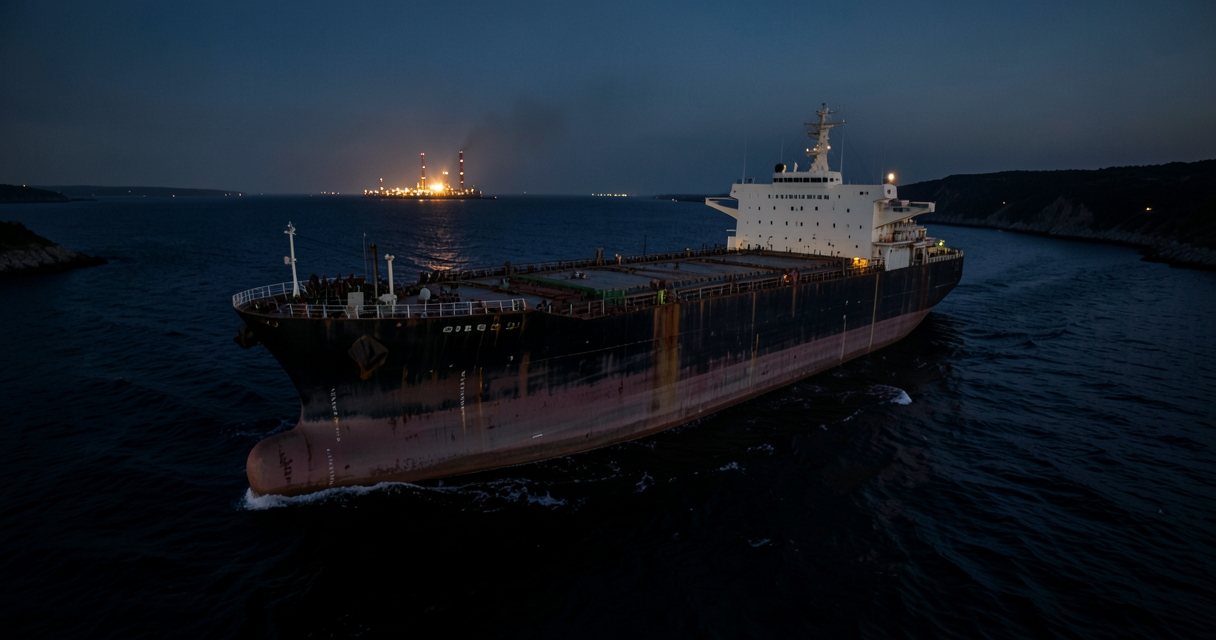
Iran's Revolutionary Guards said on Monday that two oil tankers struck mines in the Strait of Hormuz, causing explosions, Reuters reported. The claim has not been independently confirmed, and fresh tanker incidents in the region underscored the risks to exports even as flows recovered.
Phil Flynn of the Price Futures Group said in a note that "none of this means the risks have gone away," adding that Iran's claims keep a risk premium in the market even as actual flows recover. Mizuho Securities said reports that President Trump has told advisers he will hold off on attacks on Iran, and the assumption that the United States is tired of war in Iran after the midterm election, have added to the bearish momentum.
What to watch next
The question now is whether Middle East export flows stay restored. Shipments through the Strait of Hormuz have nearly returned to pre-war levels, but analysts at BMI said the recovery remains fragile, with regional supply still vulnerable to fresh disruptions.
Traders will also watch OPEC+ output decisions, the pace of global demand, and whether U.S.-Iran talks restart. For now, the market is pricing a surplus — while keeping one eye on the Strait. This article is general market commentary, not investment advice.